Remote work is a tradeoff I cannot refuse
During the COVID-19 pandemic, I went from a traditional office job to a pure WFH job. Several years and jobs later, I'm still working remotely full time.
Working from home has obvious perks, mostly downstream of getting time back from commuting. Time, money and a more flexible schedule are all types of optionality, a capacity for agency. Normally, you have to trade these things off against each other - you don't get all three together - so this is quite a valuable combination.
One of my previous jobs explicitly let me choose - the company primarily operated remotely, but there was a very nice office which was available for anyone to come in when they felt like it. As it turns out, I almost never felt like it. Ironically, this "capacity for agency" turned out to be a really sticky default.
And yet, when I did go in, I ended up having a really good day. Seeing a random subset of colleagues in person was pleasant and stimulating. The commute took some time, but also resulted in subjective time dilation, as the barrier between work and home was so varied and distinctive. I would usually bike part of the way too, so it was physically invigorating. I would get back home feeling good, feeling refreshed, and feeling like I still had a full evening ahead of me. So I would think to myself, "that was great, I should do that more often." And then I wouldn't for another few months.
If the occasional commute feels good, it doesn't necessarily mean I should commute all the time. But it suggests that some aspects of WFH are hurting me. Unfortunately, it's coupled with a core personality trait - I'm a homebody. If I don't make plans, I'm at home. Most of my hobbies happen at home. Most of my Google Maps searches start or end at home. Even when I'm travelling and sightseeing, I prefer to go back and forth to the hotel room multiple times per day.
When I work from home, I lose this extrinsic reason to leave the house every day, and suddenly leaving the house requires willpower. In fact, without that strong signal of the entire office getting up to leave at 5, even stopping work on time requires a bit of willpower. Small errands used to have a low marginal cost if I was already out - what's one extra stop on my commute home? - but now they feel relatively large when the alternative is staying in. When willpower is low and I need a haircut, I sometimes resort to DIY to avoid going to the salon.
Marginal willpower effects are also surprisingly powerful when it comes to small tasks like doing Anki or other forms of light studying. When riding the subway, there's a short-ish time window with little to do, so I may as well do a few flashcards or some reading. When I'm at home, there's any number of things I could be doing and no natural time box, so I tend to procrastinate.
During the COVID-19 pandemic, many cities had extended lockdowns where large parts of the population were suddenly spending a lot more time cooped up at home, isolated from friends and family, and subjectively not feeling so good. CGP Grey released a video about how to make being stuck at home less depressing by dividing the home up into several "stations", which would at least feel like psychologically distinct locations. This would also physically enshrine certain activities like exercise, which becomes all the more important when stuck indoors.
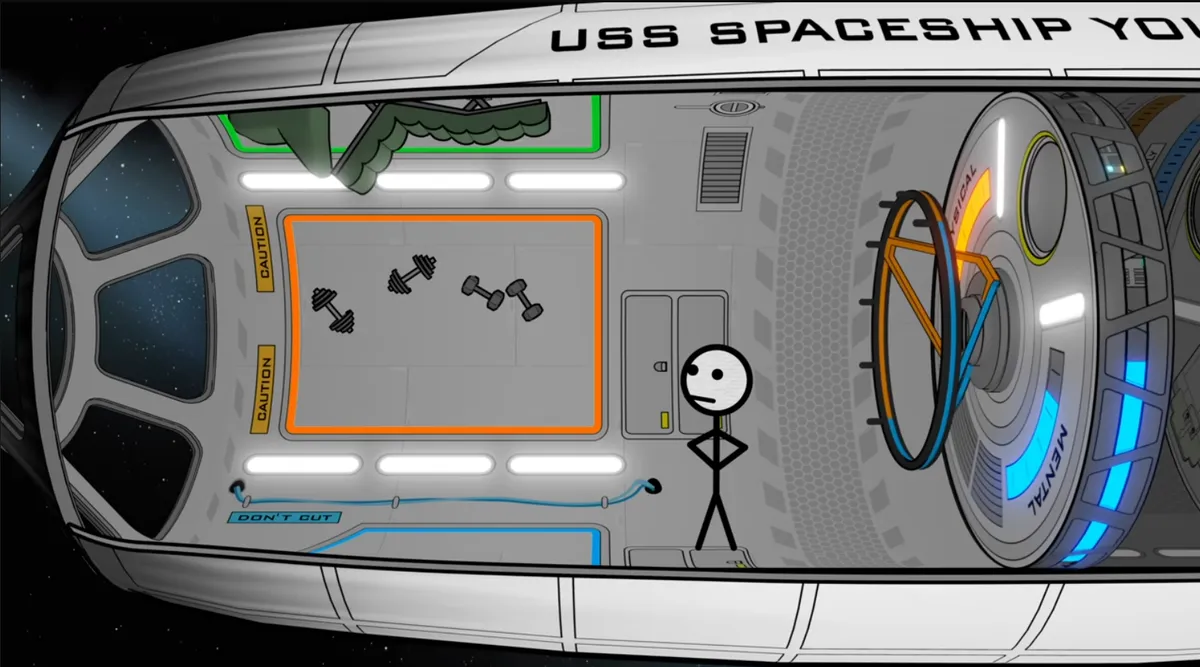
This was reasonable advice during the pandemic but strikes me as wrongheaded now. It's basically the Soylent approach to mental health - an artificial and convenient way to get the essentials. It doesn't not work but it is lacking a certain joie de vivre. Increasingly, I think the answer has to come from going places and seeing friends (and perhaps strangers) after work.
Remote work clearly interacts badly with certain personality traits of mine - it shifts my psychological defaults in a powerful way that works against my overall health and goals. But despite everything, it also gives so many second chances to get things right. I procrastinate for a bit, and then I do the thing. I stay up a bit late, but I still get a full night's sleep. I drag my feet going to the venue, but I can splurge on an Uber if I need to. It's a very patient, forgiving framework, and one that I'm clearly not ready to give up just yet.